
1. Blog Post Purpose and Strategy
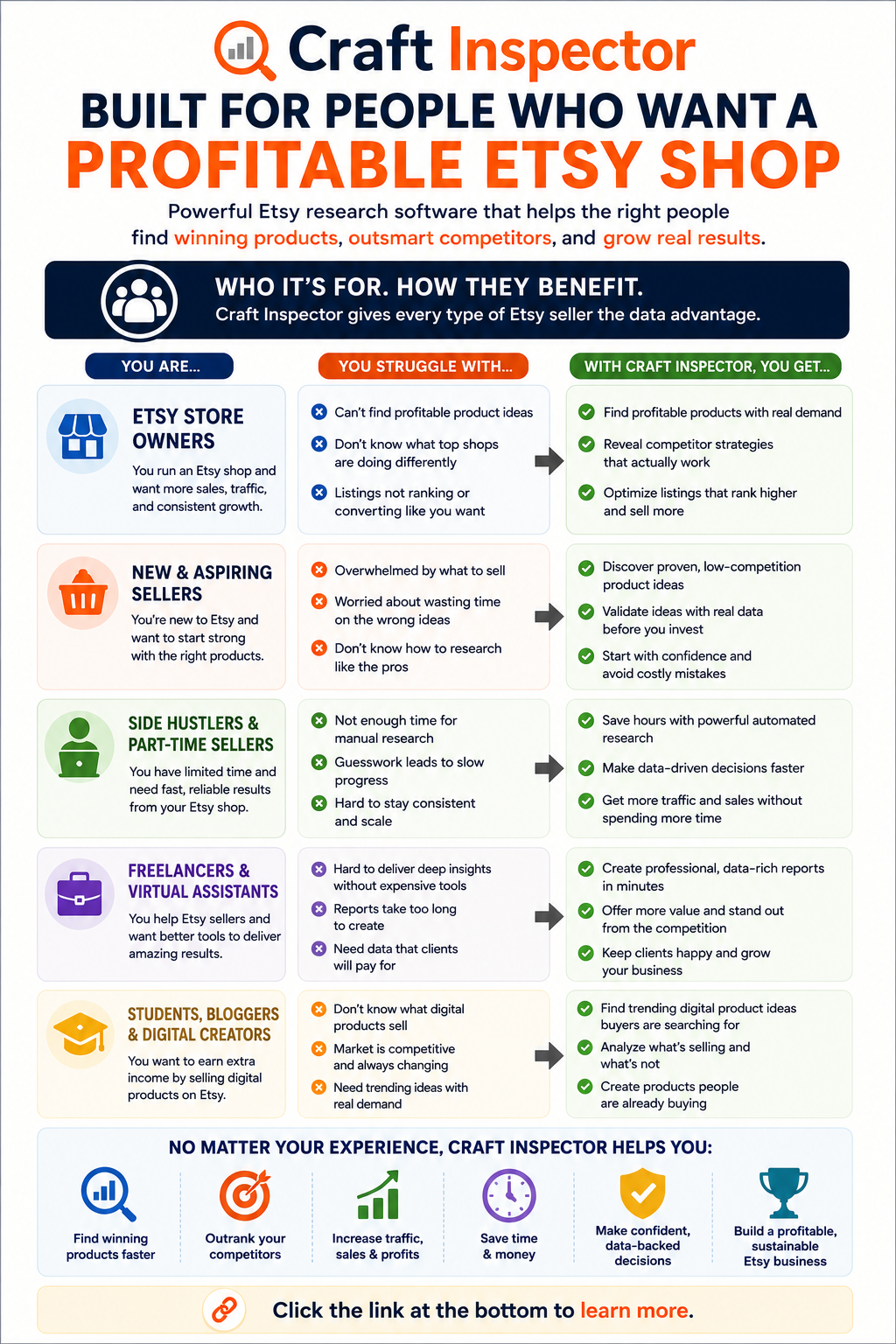
The original blog post was created for a specific high-conversion task: to attract cold search traffic with page-one Google rankings for buyer-intent keywords related to Etsy research software and marketplace selling. The target audience is primarily Etsy store owners, eCommerce sellers, and aspiring entrepreneurs who are actively seeking better ways to find winning products, understand competitors, and drive more sales. Another key group includes side hustlers, freelancers, students, or bloggers looking for extra income through competitive analysis or digital product sales.
Unlike a sales page, the blog post is designed as a credible solution-focused article—answering real searcher questions, teaching actionable insights, and only introducing Craft Inspector as a natural, logical next step, rather than leading with a hard sell. This subtlety is important because the traffic is “cold” (no previous exposure to your offer or brand).
Try Craft Inspector now — no subscription, instant access, and a 30-day results guarantee.
2. SEO-Focused Title Options and Metadata
A. Multiple Title Options:
– SEO Title: Directly targets the high-volume, high-intent keyword “Etsy research software.”
– Clickbait Title: Creates emotional curiosity, referencing a “secret” top sellers know—this increases click-through rates (CTR) for shoppers skimming Google results.
– Hybrid Title: Combines the above: includes the primary keyword and a specific, results-focused promise.
B. Meta Description:
A succinct, keyword-rich meta description (<155 characters) summarizes the main problem solved (finding profitable Etsy products and traffic sources) and includes a reason to read (increase revenue).
C. Featured Image Alt Text:
Optimized for Google Images and accessibility, it describes the visual benefit—Etsy research dashboard and analytics—reinforcing relevancy for both users and search algorithms.
3. High-Converting Blog Post Structure
A. The Hook: Meeting Search Intent Head-On
This section opens by immediately acknowledging the searcher’s problem—not with theory or fluff, but by referencing their likely situation (struggles with unpredictable Etsy traffic or sales). It gives voice to their frustration, then promises a concrete solution by the end.
The language demonstrates empathy (“chances are you just searched for…”) and stakes a claim: “Here’s why the real winners succeed—and how you can, too.” This technique builds emotional rapport and relevance from the first line.
B. “Why This Is Harder Than It Should Be”
Instead of generic complaints, this section acknowledges what the reader has probably already tried:
– Manual competitor research
– Broad or generic keyword tools
– Pinterest/Facebook groups
– Freelancer reports (expensive, often incomplete)
– Relying on outdated or superficial Etsy analytics
This approach disqualifies ineffective solutions up front and establishes an important contrast: Craft Inspector is coming as a real, differentiated alternative, not “more of the same.”
C. The Key Insight (Core Teaching Moment)
Don’t rely on guesswork — see exactly which trends are driving real Etsy sales today
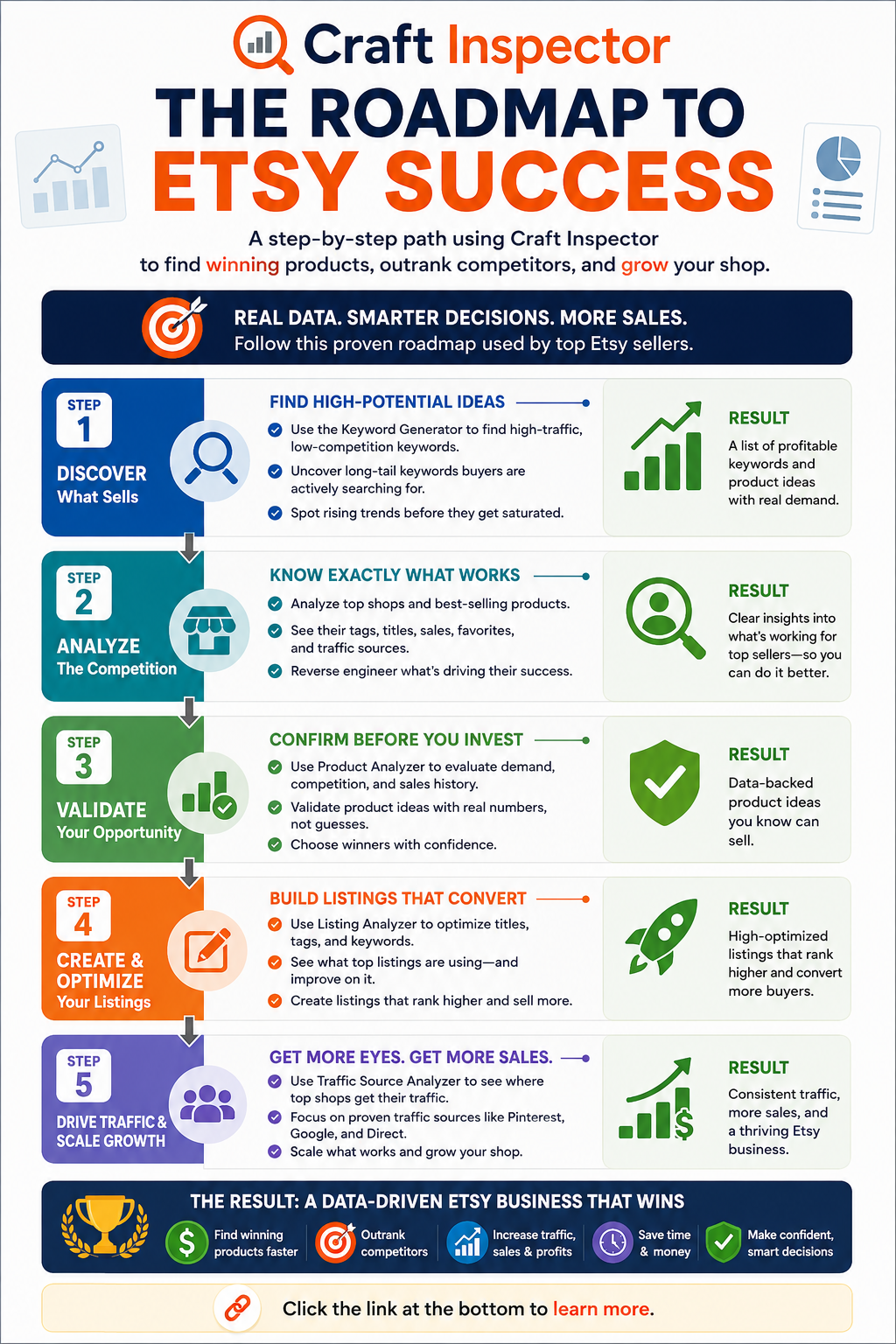
Here, the post delivers specific, valuable education: the breakthrough is that all the data to win on Etsy exists but is scattered and hard to manually collect. “Top shops” quietly use powerful research tools to automate discovery—not just of keywords, but of complete product, shop, and even traffic source insights.
The post reframes “competitive analysis” as not just a nice-to-have but *the* strategic advantage—turning “guesswork” into action based on real, proven data.
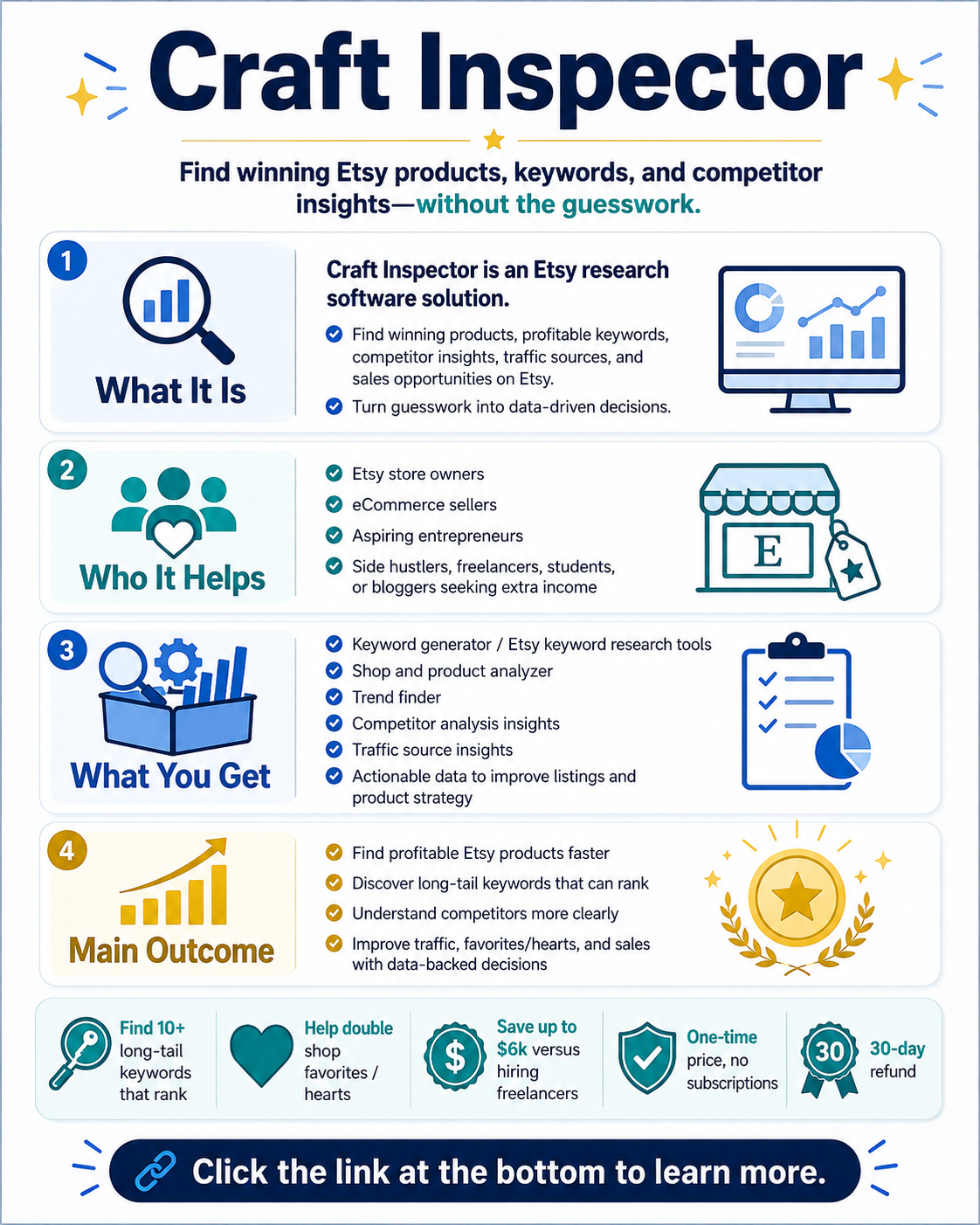
By introducing Craft Inspector as the tool that systematizes all this (with features like a keyword generator, shop/product analyzer, trend finder, and more), the author both builds trust (the reader learns something concrete) and provides a logical introduction to the offer.
D. How It Works / What To Do
This section shows readers what practically to do next:
– Step-by-step walkthrough (download, run keyword/product/shop research, apply findings, update listings)
– Explains that many try to do this “piecemeal,” but Craft Inspector provides the fastest shortcut—without exaggerating that it’s the *only* solution.
The recommendation to Craft Inspector is embedded contextually—reading as a natural next step rather than a hard CTA, while still hyperlinking at a strong conversion point.
E. Proof and Results
Because cold traffic is naturally skeptical, the proof section is both data-driven and realistic:
– Specific outcomes (e.g., “finding 10+ long-tail keywords that rank,” “doubling shop favorites/hearts,” “saving $6k versus freelancers”)
– Highlighted real testimonials from successful eCommerce operators, lending third-party authority and specificity.
– Frames the transformation in terms of before/after scenarios: lost time and guessing versus confident, data-driven action.
F. Conclusion + CTA
This part distills the “one thing to remember” thesis (“on Etsy, those with the best data win”), reinforcing the value of acting on proven insight rather than just hard work. Instead of pressuring the reader, the CTA cultivates curiosity: “Peek inside Craft Inspector and see what your competitors already know.” This approach encourages a next step without feeling salesy.
Join thousands of Etsy entrepreneurs — take control of your shop analytics with Craft Inspector now
4. FAQ and Featured Snippets
To enhance both trust and SEO (especially capturing Google’s People Also Ask/featured snippets), the post ends with:
– Three common, search-driven questions about Etsy product discovery, SEO, and the ethics of research software.
– Concise answers that demonstrate authority and subtly reference Craft Inspector.
5. SEO Requirements and Technical Checklist
A. Keyword Research and Placement
– Primary keyword: “Etsy research software”—strategically placed in the title, first 100 words, subheading, and meta.
– Supporting keywords (“Etsy keyword research,” “how to find best-selling products on Etsy,” “Etsy competitor analysis,” “increase Etsy sales”) are sprinkled naturally throughout the body and subheadings.
– The FAQ & one “question” subheading matches searcher query formats for featured snippet optimization.
B. Internal & External Linking Strategy
– Two internal links (to posts on Etsy description writing and starting an Etsy shop) keep SEO juice within the site and encourage deeper engagement.
– Two authoritative external links (Statista for Etsy marketplace stats; Search Engine Watch for SEO credibility) reinforce trust with both search engines and readers.
C. Schema Markup
The post suggests Article + FAQ Schema, which helps Google parse key Q&A content and enhances the odds of rich snippets and better CTR in search.
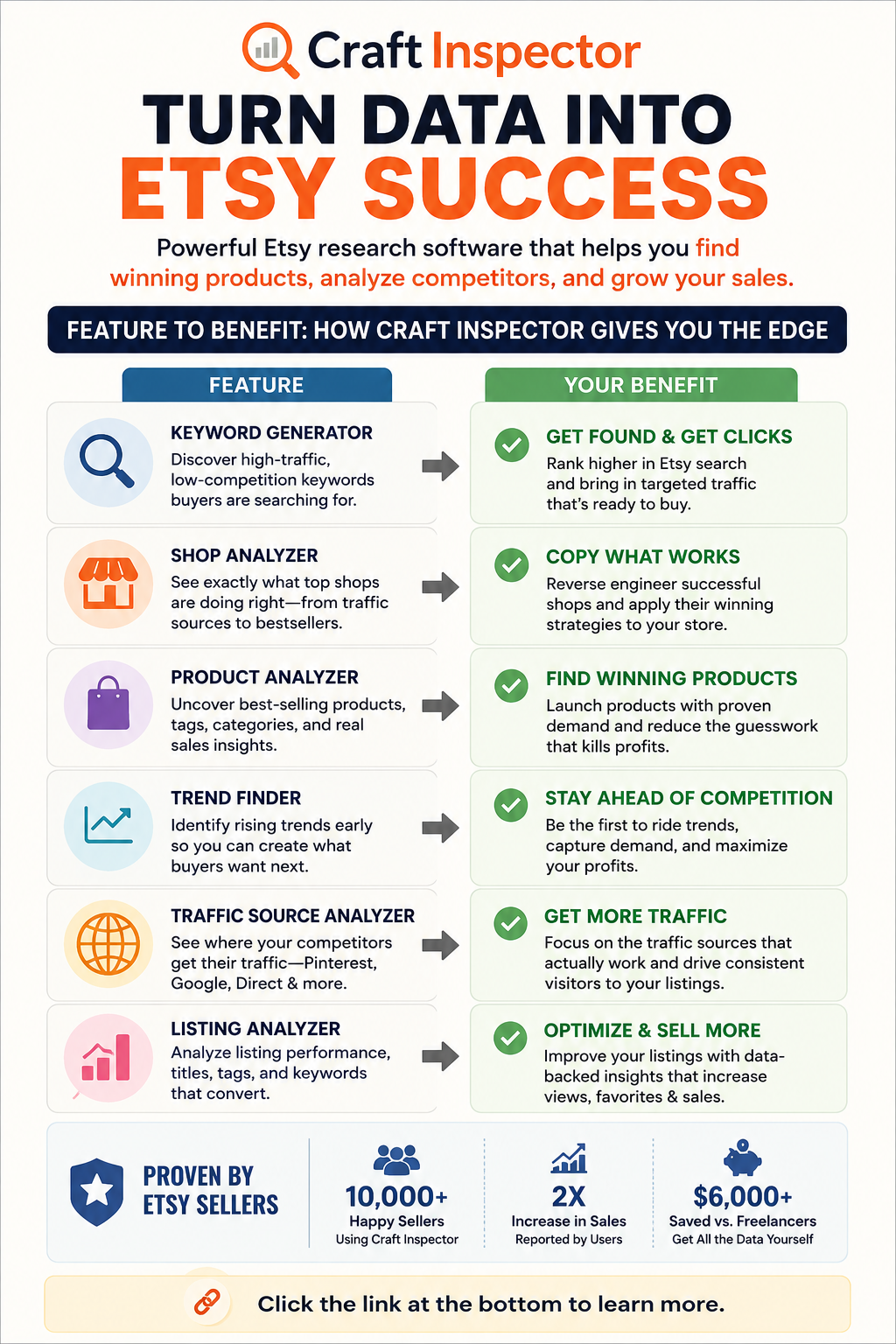
Compare your listings to top-selling shops—find the gaps and optimize with one click
6. Promotion and Cross-Channel Assets
To maximize reach beyond organic search, the summary includes custom promotional assets:
– Pinterest Pin Title Description: Tailored for the platform’s visual, DIY, and eCommerce-focused users. Optimized hashtags and phrasing to catch pinners browsing for Etsy growth hacks.
– Email Subject Line: Communicates “unlocking secrets” and “change everything”; appeals to Etsy sellers actively wanting transformation.
– Social Share (Twitter/X) Caption: Short, packed with “winning products/keywords” benefits, and includes EtsyTips and ecommerce hashtags for wider visibility.
7. Rationale and Cold Traffic Conversion Philosophy
A. Understanding Cold Traffic
Cold traffic is composed of visitors unfamiliar with you or your solutions. They tend to be skeptical, research-driven, and easily turned off by hype or aggressive selling. For top-converting SEO content:
Empathy and expertise come first. The blog shows “I understand your problem; here’s what works.”
Education with tangible value is next. The post “teaches to sell,” by delivering actionable, non-obvious advice—building trust before any offer appears.
Subtle, logical CTAs. Instead of pushing, the product is introduced as the “smart shortcut” to executing the strategies taught, making it the next best step for serious sellers.
B. Differentiation from Generic Etsy Advice
Most Etsy growth posts are vague (“take better pictures,” “write good descriptions”). This post sets itself apart by showing first-hand how the *market’s best* sellers leverage data and tools that the average seller doesn’t even know exist. By demonstrating Craft Inspector’s *unique mechanism* and referencing real outcomes and testimonials, the post gains trust and stands out in a crowded market.
8. What Makes This Approach Effective for Ranking and Conversions
Intent Alignment: Every section is structured around answering the question the searcher is actively trying to solve (“how do I find best sellers/keywords/traffic on Etsy?”).
SEO On-Page Best Practices: Keyword placement, Q&A sections, alt text, and internal/external links all tick Google’s ranking boxes.
Depth and Length: At 1,200–1,800 words, it’s comprehensive enough to rank for in-depth queries and satisfy “long-form” Google content preferences.
Emotional Journey: The structure builds the reader from frustration (“nothing else works”) through insight and empowerment (discover secrets) to excitement (“peek under the hood here”).
De-risked Offer: By emphasizing immediate access, no subscriptions, and a 30-day refund, price objection is reduced and real urgency is created (“locked in at a one-time price”).
9. Enhancing Post-Longevity and Trust
The inclusion of:
– Updated market statistics from trusted sources (e.g., Statista’s Etsy revenue data)
– Clarification around what is and isn’t allowed on Etsy (ethical, above-board use of public data)
– Results from real community testimonials (not just the vendor, but also partner site owners and SaaS founders)
…all serve to future-proof the blog post, keep it relevant for a longer period, and ensure readers see it as a useful, credible resource—even if they aren’t ready to buy today.
10. Opportunities for Ongoing SEO Growth
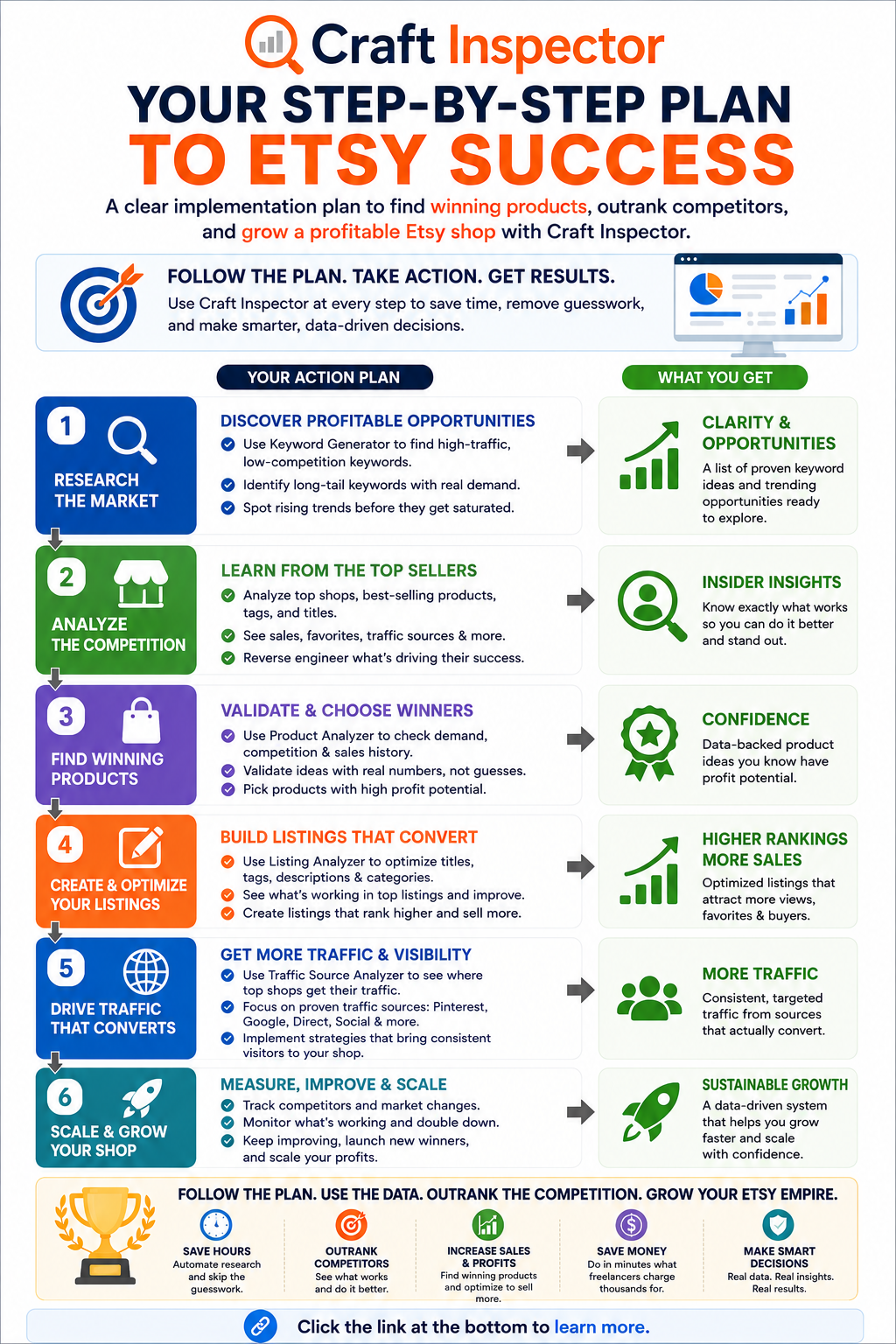
Don’t rely on guesswork — see exactly which trends are driving real Etsy sales today
Because the content includes:
– Internal link prompts,
– Encouragement to evergreen supporting topics (“How to write effective product descriptions,” “Step-by-step Etsy store launch”); and
– FAQ schema for rich snippets,
…it becomes a hub page for both new and returning traffic, increasing dwell time, lowering bounce rate, and supporting the entire website’s authority on Etsy and eCommerce topics.
Final Summary
In summary, the post and supporting assets are a blueprint for compounding SEO and conversion success. Each carefully crafted section, sentence, and strategic linking point is designed to:
– Capture and answer user intent at every step,
– Build genuine trust (through specificity, education, and proof),
– Position Craft Inspector as the natural “secret” weapon of top sellers,
– Make taking the next step virtually irresistible—without aggressive hard selling,
– Create a foundation for long-term ranking power and community building.
