


If you’re reading this, chances are you’re frustrated with the endless battle to rank your content on Google. You’ve poured hours into keyword research, created page after page, and still struggle to get the traffic, rankings, or results you deserve. What’s the missing piece? Today, you’ll discover a proven path to consistently uncovering those *untapped keywords* that your competitors haven’t even noticed—along with a shortcut to higher rankings, more traffic, and easier conversions, with no guesswork involved.
Why Most Keyword Research Fails (And Leaves Content Creators Stuck)
Let’s start with the reality almost every marketer, blogger, or small business owner faces: keyword overload. There’s no shortage of “SEO tools” promising the next golden keyword, and nearly everyone is fishing in the same noisy pond: Google Keyword Planner, Uber suggest, Ahrefs, or the trusty old Google Auto suggest bar.
But what if you’ve followed all the traditional advice, only to find:
1. Nearly every keyword suggestion seems highly competitive, already targeted by established authorities.
2. Long-tail keyword tools spit out endless variations, but few have real search intent behind them.
3. You’re left guessing about what people *are really asking and end up rewriting the same topics as everyone else.
If this sounds familiar, you’re not alone. Traditional research methods leave you chasing the popular, obvious, and overused—while the real opportunities are buried in plain sight, waiting for somebody to tap into them.
The Missed Goldmine: Why Google’s “People Also Asked” Is the Hidden Key
The game changer isn’t just in finding “another keyword”—it’s about understanding what your *audience* is actively asking *right now*. This is where Google’s “People Also Asked” (PAA) feature comes in.
You’ve seen it hundreds of times: a drop-down box with related questions in the middle of most search results. These aren’t randomly generated—they’re live signals of exactly what users want to know about any given topic, in their own language. Every new click reveals dozens, sometimes hundreds, of related follow-up questions—many of which have little or no competition and are packed with buyer intent.
Why does this matter so much for ranking today?
Because search intent has become Google’s 1 ranking factor. The more your content aligns with the *questions and needs* represented in PAA results, the more likely you are to:
Appear in featured snippets and zero-click results.
Outrank entrenched competitors—because your pages address real, up-to-date queries.
Earn longer dwell times and higher engagement—because you’re solving real user pain points, not regurgitating old advice.
What Makes Finding These Topics So Difficult Without the Right Tools?
Most standard keyword tools completely overlook PAA and intent clustering.
They might show related terms, but rarely can they “click through” the branching layers deep enough to reveal the full set of questions users ask.
Even manual research is painfully slow—you can only click and copy so many questions before losing hours or days.
Worse, keyword planners typically miss new, fast-rising query patterns—because these questions may not have enough historical data, even if they have plenty of immediate demand.
And yet, marketers who *do* target these queries tend to see their content rise quickly—often with less competition and with visitors who are closer to becoming customers.
The Key Insight: Why “Intent-First SEO” Leaves Other Keywords Behind
What Are “People Also Asked” Keywords, and Why Do They Matter?
Let’s break it down:
PAA keywords are the clusters of related questions Google surfaces based on real user behavior and search context. When someone Googles “best hiking shoes,” Google offers questions like “What should I look for in a hiking shoe?” or “Are waterproof hiking boots worth it?”
These aren’t just variations—they reflect the exact language and deeper needs of people actively looking for help or to buy something.
By targeting unaddressed, new, or underanswered “PAA” topics, you create content that scratches the real itch your customers have. You bridge the gap between what’s already been answered and what buyers are *still* searching for.
Here’s where the right tool completely changes the process.
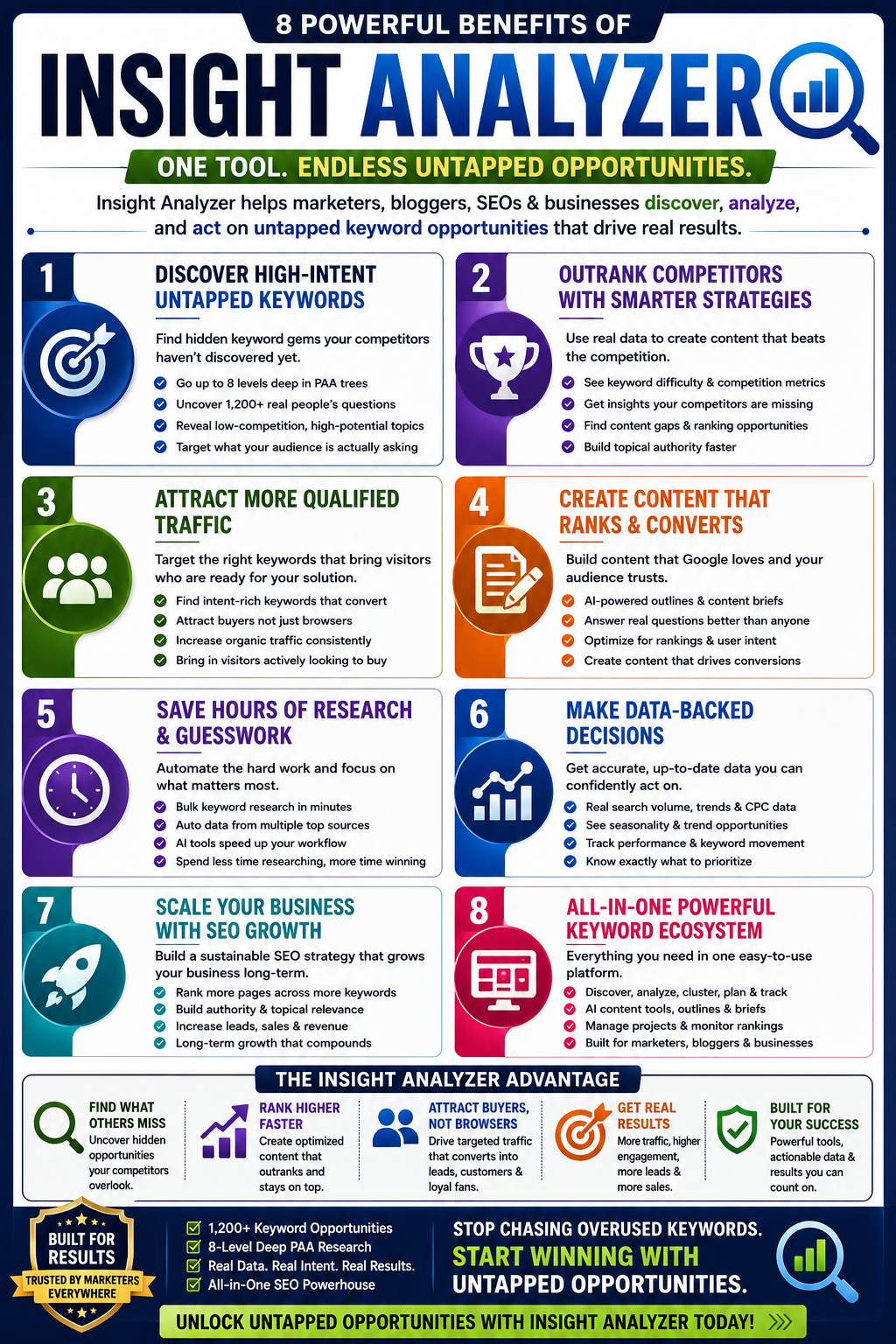
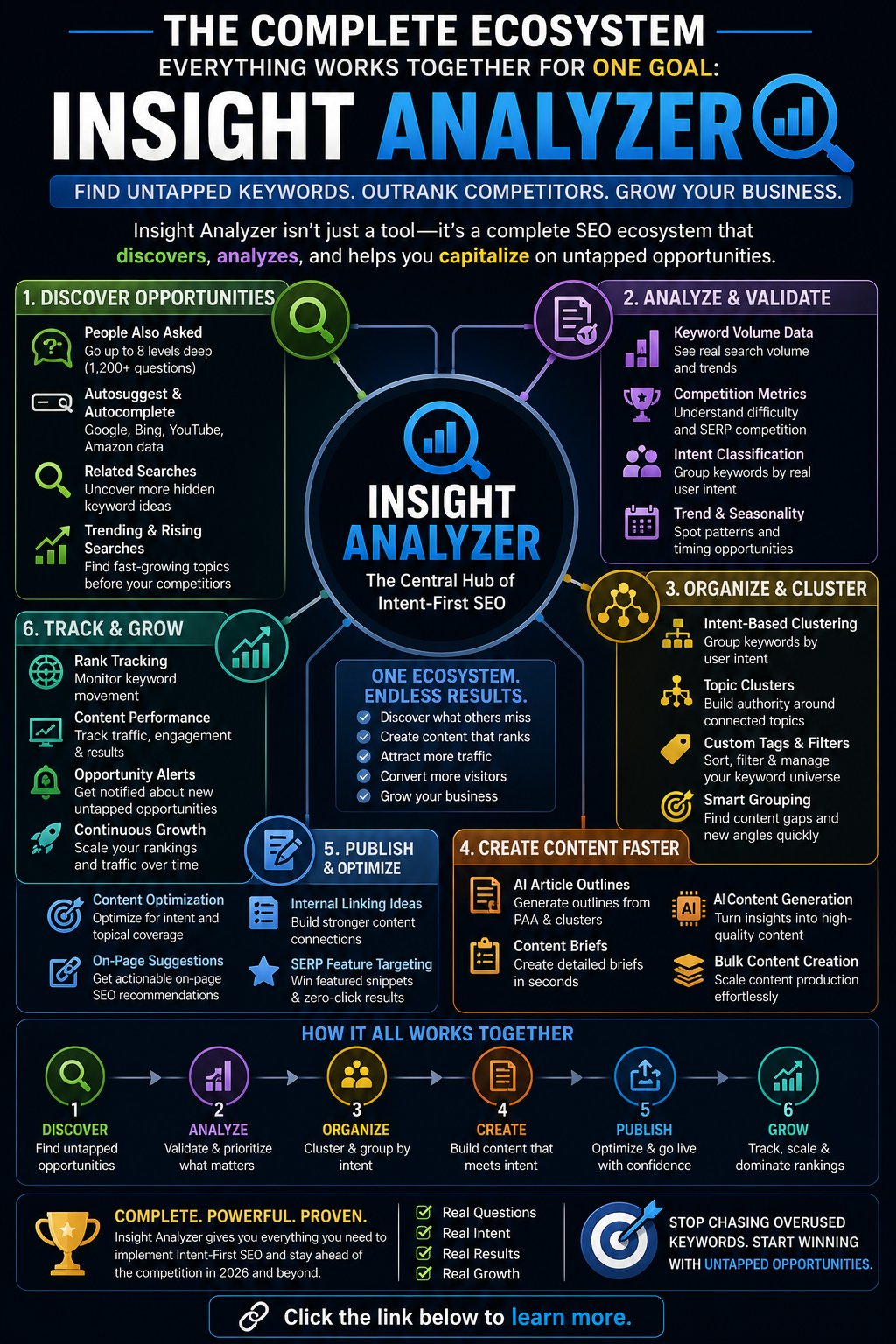
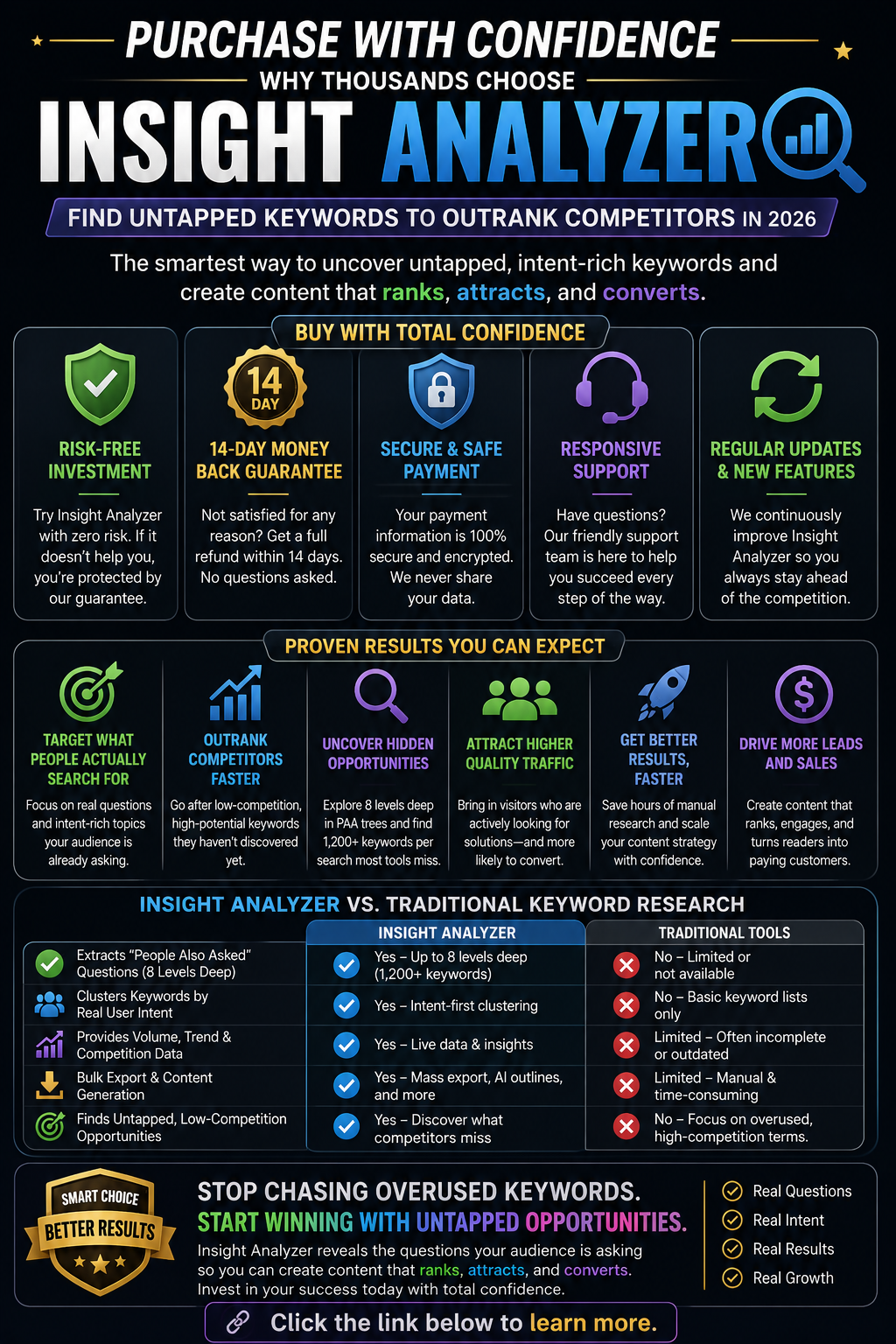
Insight Analyzer, for example, is desktop software designed solely to extract, expand, and analyze these “People Also Asked” trees and intent-rich keyword clusters. While most SEO tools stop at broad suggestions, Insight Analyzer lets you:
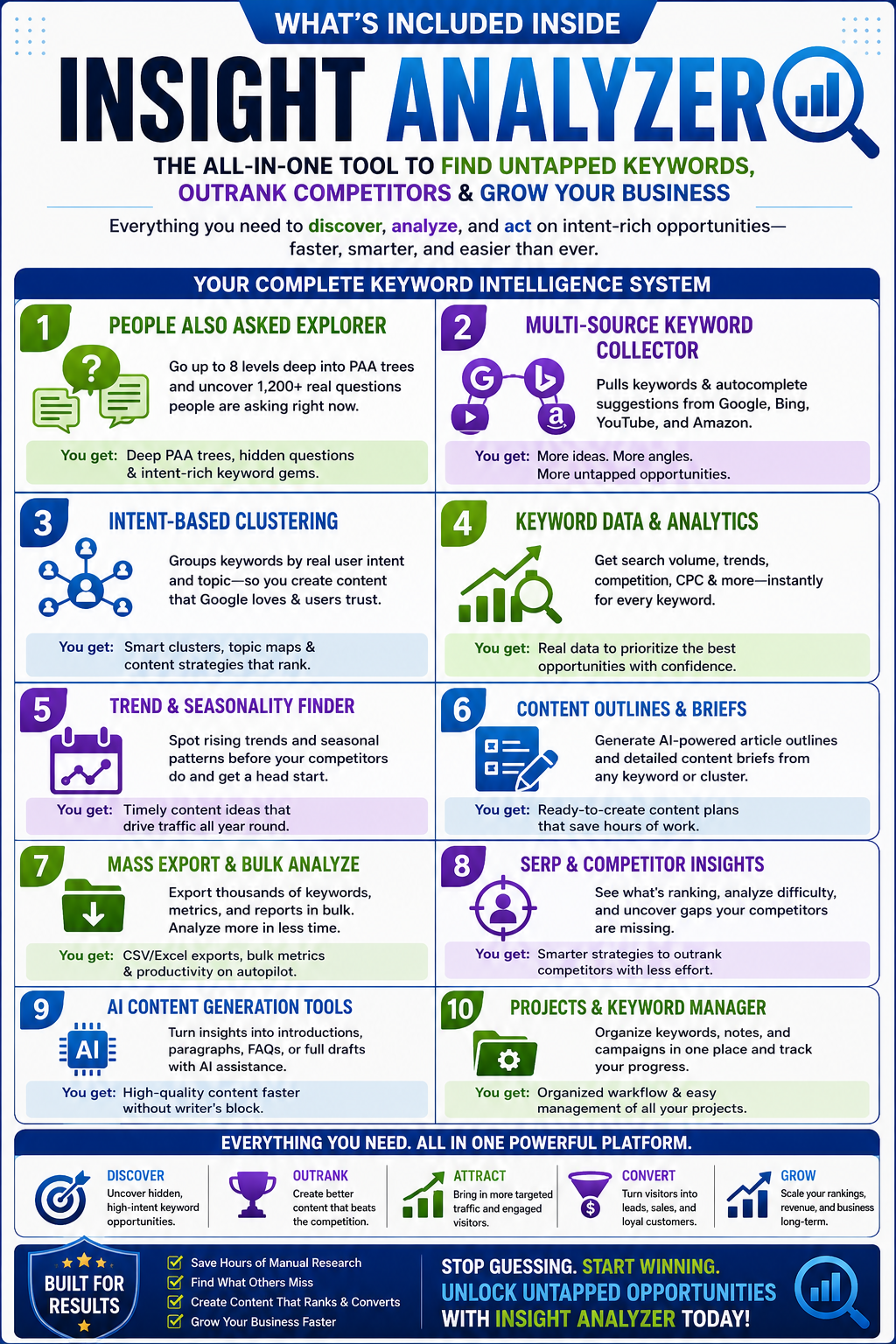
Go 8 levels deep into PAA question trees (uncovering 1,200+ queries per search).
Extract, group, and cluster keywords by real user intent—using live Google, Bing, YouTube, and Amazon data.
Get automated keyword volume, trend, and competition data—so you know which ideas are worth your effort.
Mass export, bulk analyze, and even generate articles or content outlines from your findings.
This approach, called “intent-first SEO,” isn’t just powerful—it’s now essential. Google wants to serve “people-first content,” not generic, engine-optimized fluff. When you target real questions and new search patterns, you get rewarded with higher visibility *even in saturated markets*.
Step-by-Step: How to Find, Analyze, and Use Untapped Keywords the Smart Way
So, how can you put this to work for your site? Here’s the practical walk through:
1. Start with a Broad Keyword or Idea
Enter your main product, service, or blog theme into a tool like Insight Analyzer.
The software pulls in all available “People Also Asked” suggestions, along with auto suggest/autocomplete keywords from Google, Bing, YouTube, and even Amazon.
2. Expand and Branch Out
Go deeper by “clicking” into related questions inside the tool. Each branch reveals more nuanced, laser-targeted questions that buyers are really typing in.
Within minutes, you can uncover hundreds—or even thousands—of long tail questions in your niche.
3. Cluster and Analyze
Use automated grouping features to segment similar questions and keywords together. This helps you create entire content silos around buyer intent (e.g., “Which hiking shoes are best for beginners?” vs. “Are waterproof hiking boots comfortable in summer?”).
Pull in supporting data like search volume, CPC, and competition. Prioritize clusters with high intent and low existing content coverage.
4. Generate and Plan Your Content (Faster Than Ever)
Send your best keywords or question clusters directly to the AI content generator inside the software.
Use flexible writing styles and tones (or rewrite existing articles/YouTube transcripts) to create *exactly* what your audience genuinely needs—no more “spun” content or guesswork.
Export your plan, set publishing schedules, and post directly to WordPress if you choose.
Create Content That Converts — Use Real Buyer Questions Pulled From Google, Bing, and Amazon.
Real-World Results: What Can You Expect When You Target Untapped Keywords?
Let’s ground this with numbers and real outcomes (no hype, just realistic results):
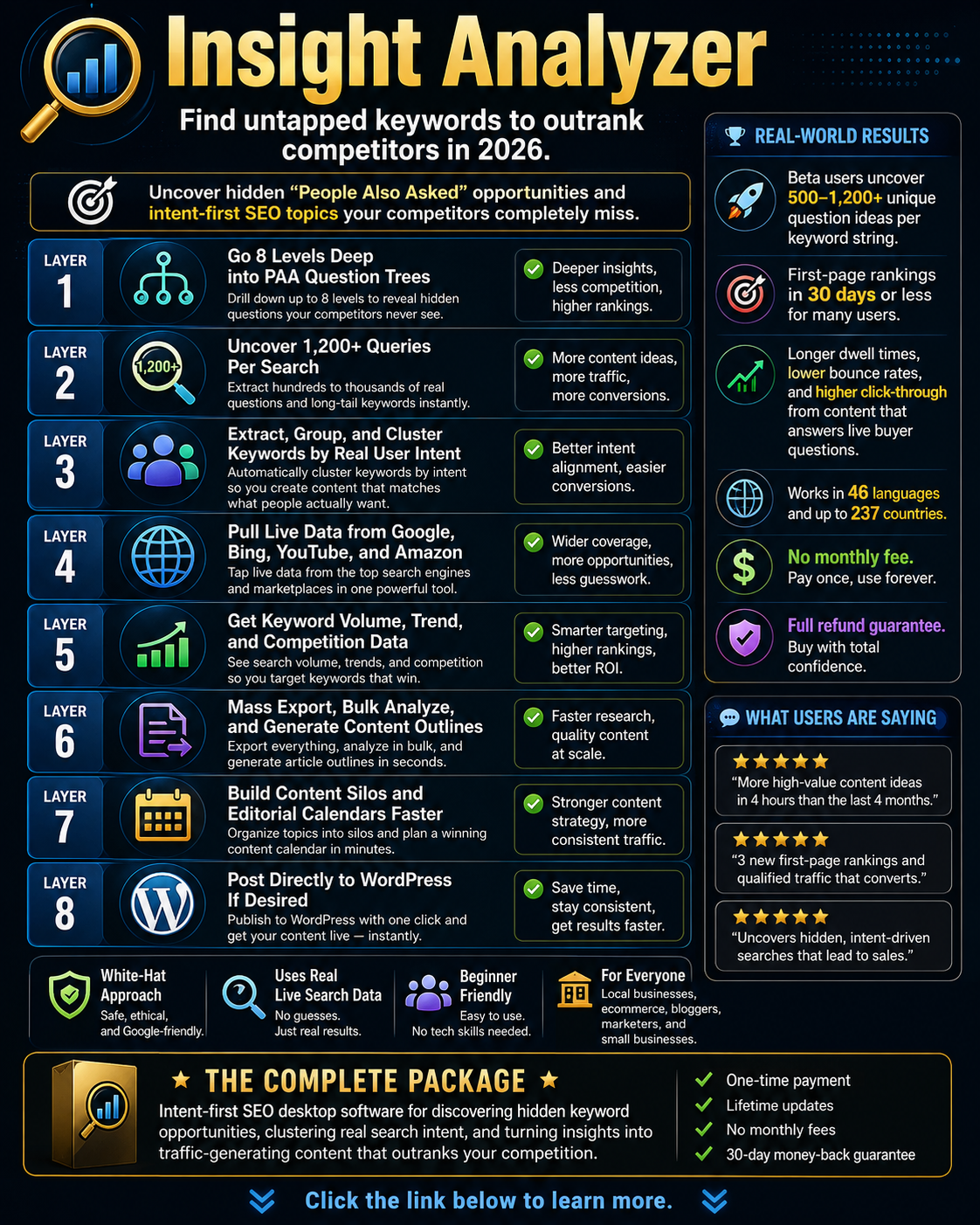
Beta users report uncovering 500–1,200+ unique question ideas per keyword string. What used to take days of manual research now takes minutes.
First-page rankings in 30 days or less: By choosing long-tail, low-competition questions drawn directly from PAA and intent clusters, many users saw their new content reach the top 10 in weeks—not months or years.
Traffic and conversions increase: Content addressing live “buyer questions” typically gets longer dwell times, lower bounce rates, and higher click-throughs from Google because it feels personal—solving visitors’ immediate needs.
Efficiency soars: Users can fill up monthly or annual editorial calendars in a single afternoon. Bulk idea generation and article creation mean you’re never stuck for fresh, high-performing topics.
Here’s what some recent users say:
“I generated more high-value content ideas in 4 hours than in the last 4 months.”
— Michelle D., SaaS Content Manager
“I’m finally seeing real results: 3 new first-page rankings and a surge in qualified traffic that actually converts.”
— Trevor K., eCommerce Consultant
“This software uncovers what even the best keyword tools miss—hidden, intent-driven searches that lead to sales.”
— John K., Agency Owner
Trust Factors: Why This Works (And Tips for Getting Results Safely)
If you’re skeptical, that’s good. Internet marketers are bombarded with “magic” software and exaggerated claims every day. Here’s why this method works—with proof, not hype.
Uses real, live search data: Google’s PAA and auto-suggest functions are updated continuously. You’re not using stale database exports but tapping into real, current questions and trends.
No black hat or risky tactics: You’re simply organizing, clustering, and answering genuine user needs. Google rewards this approach because it meets searcher intent—exactly what its algorithm wants today.
Works for any market and in any language: Traditional keyword tools focus on English or a handful of countries. Modern tools like Insight Analyzer scan 46 languages and up to 237 countries, so you can break free from the “one market” rut.
No ongoing fees or data lock-in: There are no recurring subscriptions for the software, and you own all the data and ideas you extract.
Bottom line: The sooner you move away from crowded, high-competition keywords and toward intent-based SEO, the faster you’ll rise above the noise—and build authority around topics your competitors haven’t even considered.
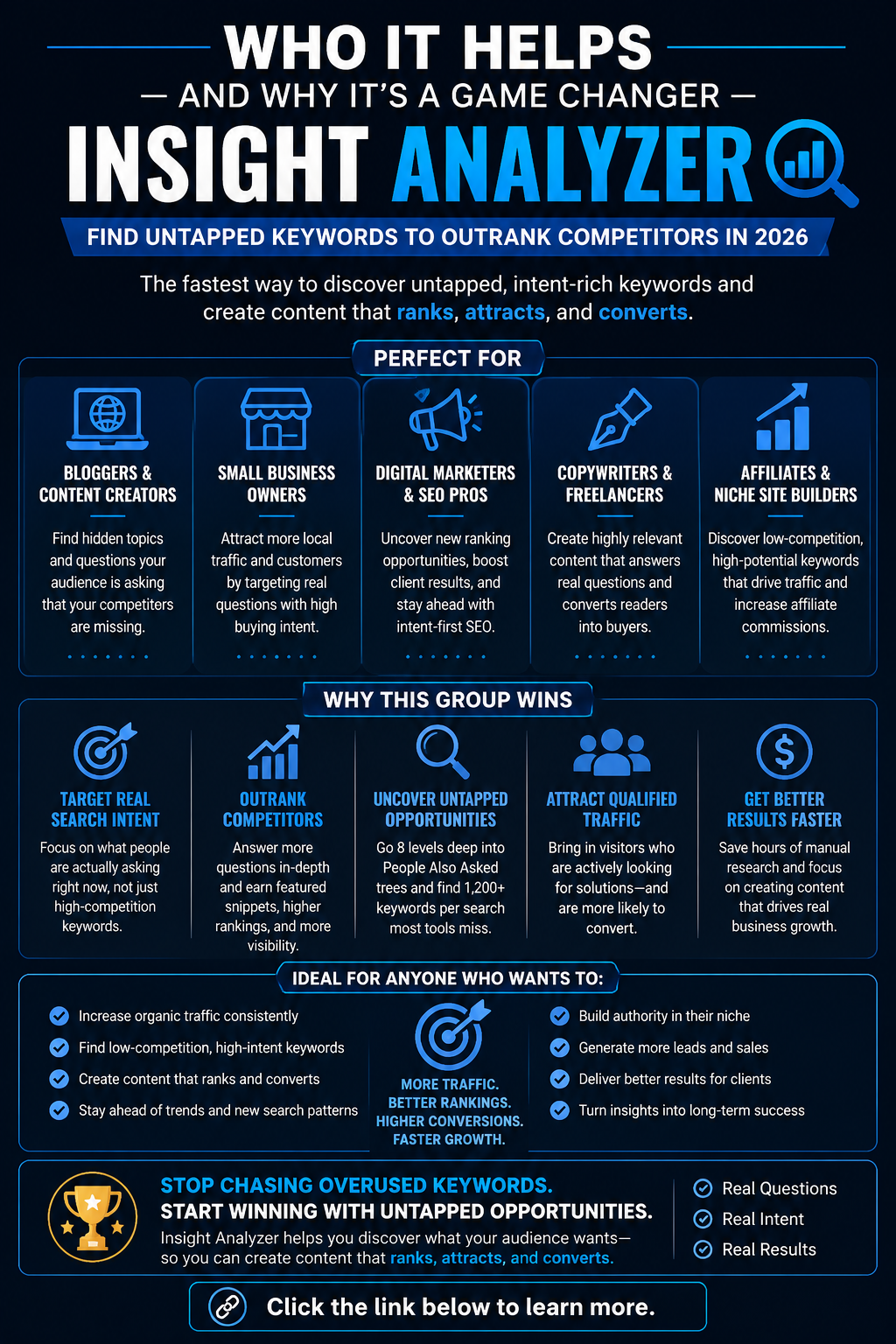
Conclusion: The Competitive Edge in SEO and Content Marketing
The way to win in 2026’s competitive SEO world isn’t by working harder or lucking into a “magic” keyword. It’s about working *smarter*—and letting data reveal what your audience really wants.
Here’s the crux:
The largest, most reliable traffic growth goes to sites that answer hidden, fresh search topics—those not being covered by your competitors. Unlocking PAA, auto suggest, and real intent clusters gives you a never-ending content advantage.
If you want to see just how many topic ideas, questions, and traffic-driving keywords are hiding in your niche, check out Insight Analyzer. You might be shocked at how much opportunity your competitors are still missing. There’s nothing to lose, and you may just find the next big edge your content has been waiting for.
Frequently Asked Questions (FAQ)
Q1. Do PAA keywords work for every niche—including local businesses or e-commerce?
Yes! Local “People Also Asked” questions and search intent phrases exist for nearly every industry, product, and service. In fact, local and product-based queries often have even *less* competition, giving you an extra edge.
Q2. Is there a risk of Google penalizing content focused on PAA questions?
No—the method is entirely white hat and supported by Google’s own best practices. In fact, addressing live searcher needs is the cornerstone of Google’s “Helpful Content” update.
Q3. What if I’m not technical or new to SEO?
Modern tools like Insight Analyzer are built for nontechnical users. With pre-built templates, bulk data export, and step-by-step tutorials, anyone can start finding and using these keywords quickly.
Remember:
Mastering untapped, intent-driven keywords is the lever that separates rapid SEO growth from endless struggle. Make sure your next blog post, video, or service page is built around real queries—today, not last year.
